
My Pricing Journey: Learning to Value My Words
My Pricing Journey: Learning to Value My Words
There is a moment most freelance copywriters face early in their business: a potential client asks about your rates, and instead of quoting what your work is worth, you drop the number to something you think they will say yes to. I know that moment well. I lived in it far longer than I should have.
My pricing journey has been one of the most uncomfortable and most important lessons of my career. If you are just starting out, I want to save you some of the hard lessons I learned the slow way.

The Early Days: Undercharging as a Strategy
When I first launched my copywriting business, my pricing logic went something like this: charge less than everyone else, and clients will choose me. It felt reasonable at the time. I did not have a large portfolio. I was not widely known. Lower prices seemed like a fair trade for experience.
What I did not understand was the signal that low pricing sends. Clients often associate price with quality. When you charge very little, some clients begin to wonder what they are actually getting. Others take advantage of the low rate without truly valuing your time or your work.
I was working hard, delivering quality results, and still struggling to cover my basic business expenses, let alone build toward any kind of financial goal. Something had to change.
The Shift: Value Over Hours
The turning point came when I stopped thinking about pricing in terms of hours worked and started thinking about outcomes delivered.
An email sequence is not worth a certain amount because it took me three hours to write. It is worth what it generates for the client who receives it. A landing page is not priced based on word count. It is priced based on the leads it produces and the clients it converts.
This shift in thinking changes everything. When you understand the business impact of great copy, charging fairly stops feeling uncomfortable and starts feeling accurate.
To determine fair rates, research what others in your niche are charging for comparable work. Factor in the time required, the complexity of the project, your level of expertise, and the value the deliverable provides to the client. Build in time for revisions, communication, and administrative overhead that clients rarely see, but you always feel.
Negotiating With Confidence
Once you have established clear rates, the next challenge is holding them when a client pushes back.
Pushback is normal. Not every client will immediately agree to your rates, and that is not always a reason to lower them. Some clients simply need to understand the value behind the number. Others are genuinely not the right fit, and that is okay, too.
When a client questions your pricing, resist the urge to apologize or immediately discount. Instead, explain what is included in your rate and what the client can expect as a result of the work. Speak to outcomes, not just deliverables.
It also helps to know your minimum. Before any negotiation, decide on the lowest rate you will accept for a given project. That number should cover your time, reflect your expertise, and leave you feeling respected by the engagement. If a client cannot meet your minimum, it is better to decline graciously than to resent the project from the start.
Aligning Pricing with Brand, Process, and Professional Standards
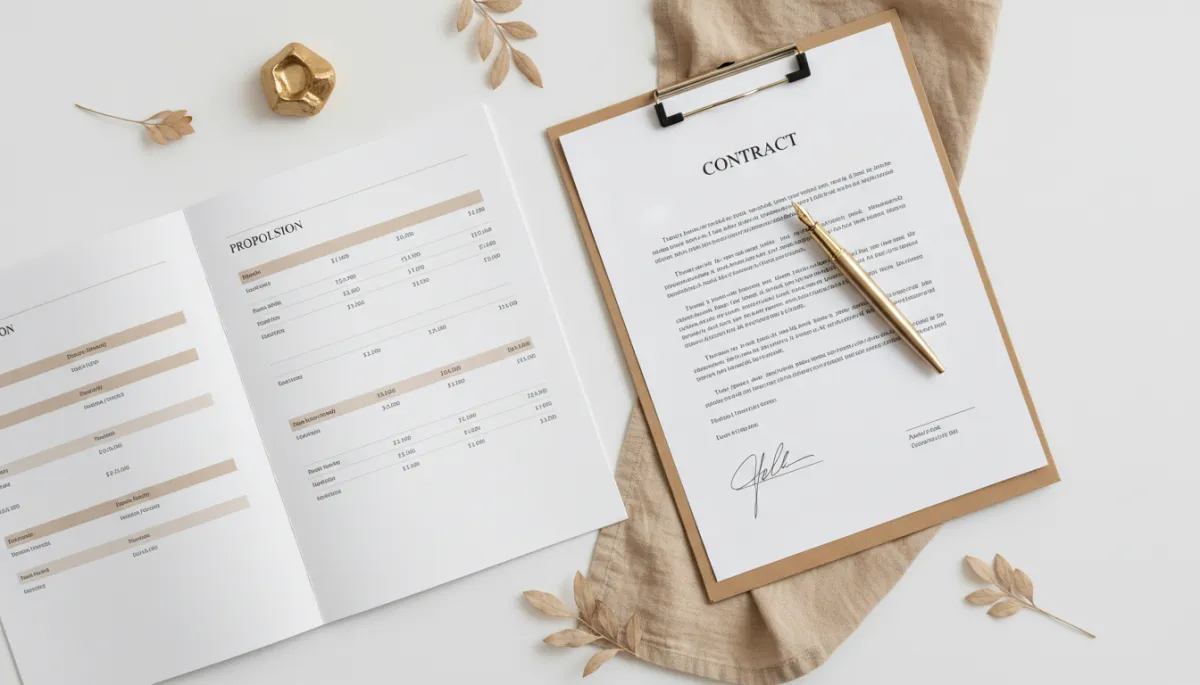
As my brand matured, so did my pricing. The visual identity—grounded in warm neutrals, black, and gold—was a reminder that the experience I offer should feel polished, reliable, and considered. My proposals, onboarding documents, and content delivery all needed to match that standard. Pricing is part of that experience.
Today, every quote reflects three core principles:
Clarity: Businesses and agencies know exactly what is included, when it will be delivered, and how feedback will be handled.
Consistency: Rates are not improvised; they are based on a defined structure that keeps pricing fair across projects and clients.
Value: Fees reflect the strategic thinking, collaboration, and measurable outcomes behind the words—not just the time spent typing them.
What I Know Now
Looking back, the times I undercharged were not just a financial loss. They were a confidence issue. I had not yet fully believed that my words were worth investing in.
The truth is, they were. And yours are too.
Your pricing is not just a business decision. It is a statement about how you value your own work and your time. When you charge what your writing is worth, you attract clients who respect that value. You show up to the work differently. You deliver differently.
Give yourself permission to charge accordingly. Your words are working hard. Make sure your rates reflect that.
If this resonated with you, pull up a chair. Subscribe to my newsletter, Brewing Better Copy. Every month, I share copy tips, behind-the-scenes thoughts, and a good read or two. Subscribe Here